Eco travel has a reputation problem. Say the phrase out loud and most people picture giving up flying entirely, spending three days on a coach to reach a city you could reach in ninety minutes, or paying triple for a hotel with a bamboo toothbrush in the bathroom. That version of sustainable travel isn’t realistic for anyone who has a job, family scattered across the country, or a limited number of annual leave days.
Here’s a better way to think about it. Learning how to improve your eco travel isn’t about cancelling trips. It’s about looking at the journeys you already take, noticing which ones you repeat most often, and making one sensible change to each. A single improvement applied to a trip you make eight times a year beats a dramatic gesture you manage once and then abandon.
So this isn’t a guilt list. It’s a troubleshooting guide. Below are the trip types most of us actually take, the main impact each one carries, and one change worth making to each. Pick the section that matches your next trip and start there.
Short-Haul Flights: Fix the Trip You Repeat, Not the One You Love
A return flight from London to Edinburgh produces roughly the same emissions as a few months of commuting by car. A return to southern Spain is considerably worse. Short-haul flying is the highest-impact thing most of us do regularly, and it’s also the hardest to give up, because the alternative often looks like nine hours on a train with two changes.
The realistic fix isn’t banning yourself from flying. It’s separating your flights into two categories: the ones you take because there’s genuinely no alternative, and the ones you take out of habit. The second category is where the easy wins live.
Take a hard look at any route you fly more than twice a year. If it’s under about four hours by rail and you’re not carrying heavy equipment or travelling with a small child, that’s your candidate. Book the train once, properly, with a seat reservation and a decent departure time rather than the cheapest 6am option. The first trip will feel like a hassle. The second won’t.
If you do fly, a few small choices matter more than people expect. Flying economy rather than business cuts your personal footprint substantially, because the seat takes up less of the plane. Packing light genuinely helps, since every kilo adds fuel burn. And direct routes beat connections, because takeoff and landing are the thirstiest parts of any flight. None of this makes flying clean. It just makes a necessary flight slightly less heavy.
Long Train Journeys: Make the Slow Option Actually Pleasant
Long rail trips have one real problem, and it isn’t the emissions. It’s that they’re often uncomfortable, poorly planned, and exhausting in a way that makes you swear off them forever after one attempt.
The main impact here is inverted: this is the low-carbon option, so the improvement isn’t about reducing harm. It’s about making the low-carbon choice good enough that you keep choosing it. A train journey you resent is a train journey you won’t repeat.
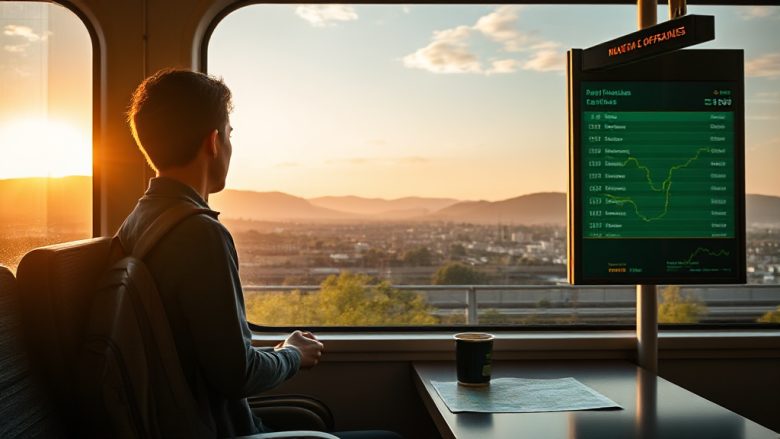
One change worth making: treat the journey as part of the trip rather than dead time between two places. Book a seat with a table if you can. Bring actual food instead of relying on whatever the trolley has left. Download something long enough to hold your attention. If the route allows it, break the journey overnight somewhere interesting rather than pushing through in one grim slog.
The practical detail people miss is connection time. Give yourself at least forty minutes between trains on a route you haven’t travelled before, and check whether your ticket is valid on the next service if you miss one. Most of the misery of long rail travel comes from tight connections and no plan B, not from the train itself.
City Breaks: Change How You Move Once You Arrive
Getting to a city is usually the biggest single impact of a city break. But once you’re there, the daily choices add up in ways people rarely notice, and they’re the easiest to change because they cost nothing.
The main impact of a city break is local transport and accommodation. Taxis and ride-hailing for every journey, a hotel with heavy air conditioning running all day, and a food plan built entirely around imported produce. None of it is dramatic on its own. Over four days it adds up.
One change worth making: decide your transport before you land, not after. Look up whether the city has a decent metro, tram, or bike-share scheme, and buy whatever day pass or travel card covers your stay. Walking a city is also the only way to actually see it, which is a happy accident rather than a sacrifice.
On accommodation, the useful question isn’t which hotel has the greenest marketing. It’s whether the building is full. A small guesthouse with eight occupied rooms uses far less energy per guest than a half-empty conference hotel with a pool and three restaurants. Staying somewhere smaller, fuller, and closer to where you actually want to be is a genuine improvement, and it usually saves money too.
Visiting Family: The Trip You Can’t Just Skip
Family visits are the awkward corner of eco travel. You can’t exactly tell your parents you’re reducing your annual emissions by not coming this year. These trips are often repeated, often long, and often not negotiable.
The main impact is the same as any other journey, but the emotional weight makes people either ignore it entirely or feel guilty about something they were always going to do. Neither helps.
One change worth making: consolidate. If you’d normally make four separate weekend trips across the year, try two longer visits instead. You halve the travel while actually spending more time with the people you’re going to see. Long weekends are lovely, but a five-day visit is usually better for everyone involved, and it removes two return journeys from your year.
If you’re driving, the fix is simpler still. Check whether anyone else is making the same journey, or whether there’s a rail option that drops you close enough for someone to collect you. A car with four people in it is a reasonably efficient way to travel. A car with one person in it, driven six hours each way, is one of the least efficient things you can do.
Where You Stay: The Quiet Multiplier
Accommodation is the part of eco travel people underestimate, because it doesn’t feel like travel. You’re just sleeping somewhere. But a hotel runs heating, cooling, laundry, lighting, and food service every day of your stay, and the difference between a well-run small place and a wasteful large one is significant.
The main impact is energy and water use, plus food waste from buffet breakfasts and daily linen changes. The improvement here is less about finding a certified eco hotel, which is often expensive and sometimes just marketing, and more about a few habits you control.
Keep the do-not-disturb sign on the door for the length of your stay. Towels don’t need replacing daily. Turn the air conditioning off when you leave the room, and set it a degree or two warmer than you would at home. Eat breakfast somewhere local rather than at an all-you-can-eat buffet that throws away half of what it puts out. These are tiny things, but they’re free, and they apply to every trip you’ll ever take.
What You Pack and What You Bring Home
Luggage weight affects every form of transport. Heavier bags mean more fuel burned on planes, more strain on trains, and more likelihood you’ll take a taxi instead of walking. Packing lighter is one of the few eco travel habits that makes the trip easier rather than more complicated.
The main impact is twofold: weight during travel, and waste at the destination. Single-use plastics, forgotten chargers bought at the airport, and souvenirs that end up in a drawer all carry a footprint that nobody thinks about because it happens in small pieces.
One change worth making: pack a refillable bottle, a small filter or purification tablets if you’re going somewhere with questionable tap water, and a foldable bag for shopping. That’s it. You don’t need a kit. You need to stop buying bottled water at four times the local price and throwing the bottle away.
On souvenirs, buy things that are made where you’re standing. Food, textiles, ceramics, anything with a local maker behind it. It supports the place you visited and it doesn’t end up in landfill by Christmas.
If You Only Do One Thing
If all of this feels like too much, here’s the short version. Find the trip you repeat most often, whether that’s a monthly flight for work, a fortnightly drive to see family, or a yearly city break you always take the same way. Change one thing about that specific trip. Take the train once. Consolidate two visits into one. Use the metro instead of taxis. Keep the do-not-disturb sign on the door.
Eco travel improves through repetition, not intensity. A single dramatic gesture you make once and never repeat does almost nothing. A small change to a journey you take eight times a year does a great deal, and it becomes automatic within a couple of trips. Start with the one you do most, and let the rest follow when it’s easy.
Frequently Asked Questions
Is it still worth travelling if I have to fly?
Yes. Flying is the highest-impact part of most trips, but that doesn’t make travel pointless. Fly less often, stay longer when you get there, choose direct routes, and pack light. A well-planned flight taken twice a year beats four rushed weekend trips with connections.
Do trains actually work for long journeys?
Often, yes, if you plan them properly. The trick is generous connection times, a reserved seat, and treating the journey as part of the trip rather than dead time. Once you’ve done one long rail journey well, the next one is far less daunting.
How do I know if a hotel is genuinely eco-friendly?
Be sceptical of labels and look at the building instead. A smaller, fuller property generally uses less energy per guest than a large half-empty one. And the habits you control, like keeping the do-not-disturb sign on the door, matter as much as any certification.
What’s the single easiest change I can make?
Take the trip you repeat most often and change one thing about it. That’s the whole method. Repetition is what makes the difference, so start with the journey you make most frequently rather than the one that feels most virtuous.